Jack Clark says the singularity has begun. What does that change?
THE SHIFT
The most useful question about the singularity may be what happens before anyone agrees on its definition. If AI makes scientific work faster, laboratories, businesses and governments could need to adapt long before there is consensus about the label.
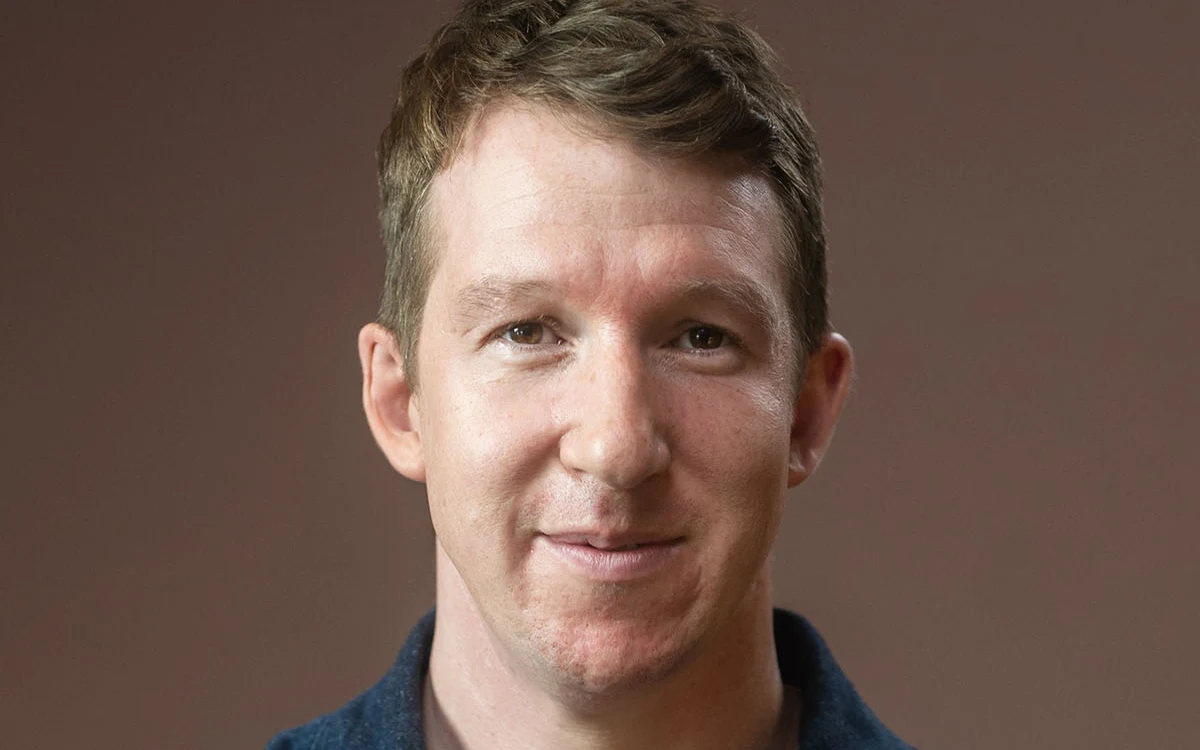
Anthropic co-founder Jack Clark brought that argument to economists and policymakers in an October 17 speech, published in Import AI on October 19. His position is that AI’s contributions to science and its own development mark the beginning of an accelerating feedback loop. It is his assessment of the direction of progress, not a newly established scientific milestone.
The shift in emphasis matters. Instead of asking only what a chatbot can answer, Clark asks how many more ideas society could investigate when software participates in research. That moves the discussion toward institutions, equipment and the people responsible for turning ideas into results.
THE PROOF
Clark points to rising performance on difficult knowledge and mathematics benchmarks. One example is Humanity’s Last Exam. Anthropic’s published Opus 5.5 results report 67.7% with tools. Its announcement also notes that narrow benchmark differences have become a less reliable guide to practical differences between highly capable models.
These results support a narrower but important conclusion: systems can complete more demanding intellectual tasks under specified conditions. Moving from that observation to a forecast about the economy requires additional assumptions about adoption, reliability, cost and how much of a research workflow can be delegated.
Our reading is that progress should be followed at the level of complete work. A system answering a difficult question, helping choose an experiment and operating a laboratory each contributes something different. Bundling them into one dramatic label can hide the decisions that matter.
THE CATCH
An idea can travel at software speed. A new laboratory cannot. Even if systems produce useful hypotheses much faster, experiments still need resources, specialist judgment and physical capacity. The bottleneck may move rather than disappear.
There is also a difference between taking a forecast seriously and treating it as inevitable. Clark helps build the technology he is describing, so his perspective is informed and interested. Readers can examine the underlying work without adopting every part of his timeline or terminology.
YOUR MOVE
Follow concrete capabilities: what task was completed, what tools were involved and what happened after the answer was produced? Those questions make research news useful without requiring you to settle the singularity debate.
If your work depends on specialist knowledge, watch how your field handles the handoff between an AI suggestion and an accepted result. For policymakers and research leaders, that handoff is also a planning question: what capacity would need to grow if useful ideas became easier to generate?
You do not need to agree that the singularity has begun to prepare for faster scientific work. Watch the capabilities, then watch the bottlenecks they expose.
Sources & further reading
- Jack Clark’s prepared IMF remarks, Import AI 477 ↗
- Anthropic: Introducing Claude Opus 5.5 ↗
- Story discovery: The Rundown, October 22 ↗
Original analysis by The Breakdown. Story discovered through The Rundown’s October 22 coverage. Read our editorial approach.