Arda wants to turn product designs into factory instructions
THE SHIFT
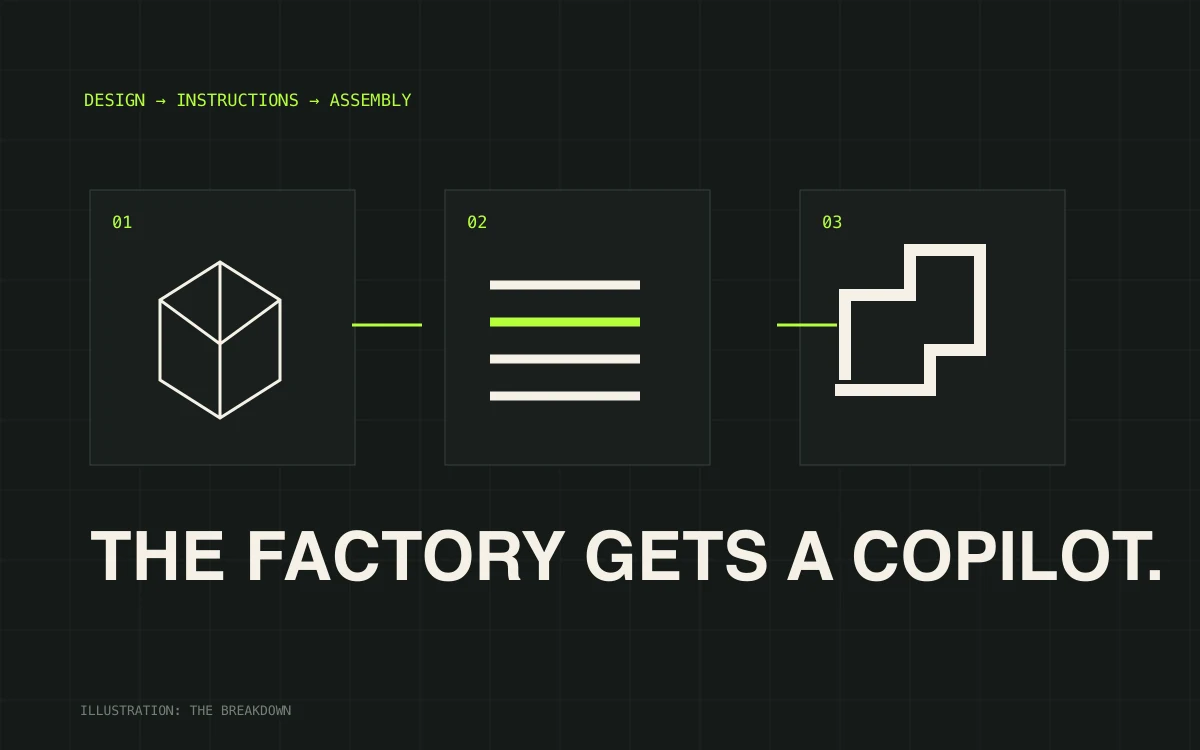
What if the slowest part of building a new product happens before anyone touches a component? Arda is targeting the engineering work between a finished design and the instructions that tell a factory how to assemble it.
The company, founded by former OpenAI research chief Bob McGrew, launched publicly on October 20. Its software works from CAD files and other design materials to help generate assembly processes. Arda disclosed $232 million in total funding, including a $160 million Series A at a $1.5 billion valuation.
That puts its immediate focus on a specific bottleneck: translating design changes into usable instructions. It is a different application of AI from generating an answer in a chat window. The output must become something a production team can act on.
THE PROOF
Arda’s announcement identifies Anduril as its first customer and design partner, with the software deployed inside ArsenalOS. The published customer example says basic work instructions that previously took ten hours can be produced in fifteen minutes. It also describes a more complex workflow falling from as much as thirty hours to about two and a half. Those are reported engineering-task improvements, not measurements of total factory output.
The Next Web’s launch coverage describes the product as a user interface and agent for manufacturing engineers. The practical appeal is easy to understand: when designers revise a part, somebody must work out what changes downstream. An assistant that makes that translation easier could free experienced engineers to handle exceptions and decisions.
THE CATCH
A faster instruction sheet is not the same thing as a faster assembly line. Materials, equipment, staff training, inspection and approval can each become the next constraint. The useful measure for a manufacturer is the whole route from design revision to a correctly built product.
Arda describes robot programming as a development direction. That matters because a factory that can draft new instructions and one that can automatically reconfigure its machines are different propositions. The first can support today’s engineers; the second requires a broader chain of software and physical execution. Keeping those stages separate makes the announcement easier to judge.
YOUR MOVE
If you work in hardware, pay attention to handoffs: where does an approved change sit waiting for someone to translate it? That is the part of your workflow this category of tool is trying to improve.
For everyone following AI, watch the business outcome rather than the fundraising headline. More customer examples, shorter changeover times and clear deployment details will say more about the opportunity than a valuation alone. The interesting question is whether software can help factories adapt as quickly as their products evolve.
Arda’s first opportunity is making engineering changes easier to execute. The bigger manufacturing story begins when those saved hours improve the entire production process.
Sources & further reading
- Arda’s official launch announcement ↗
- The Next Web: Arda’s manufacturing launch ↗
- Story discovery: The Rundown, October 22 ↗
Original analysis by The Breakdown. Story discovered through The Rundown’s October 22 coverage. Read our editorial approach.