Anthropic’s public benefit fund: an equity pledge is the first step
THE SHIFT
If AI creates enormous value, how does any of it reach people outside the companies building it? Anthropic has proposed one mechanism: giving a public benefit fund a stake in the company itself.
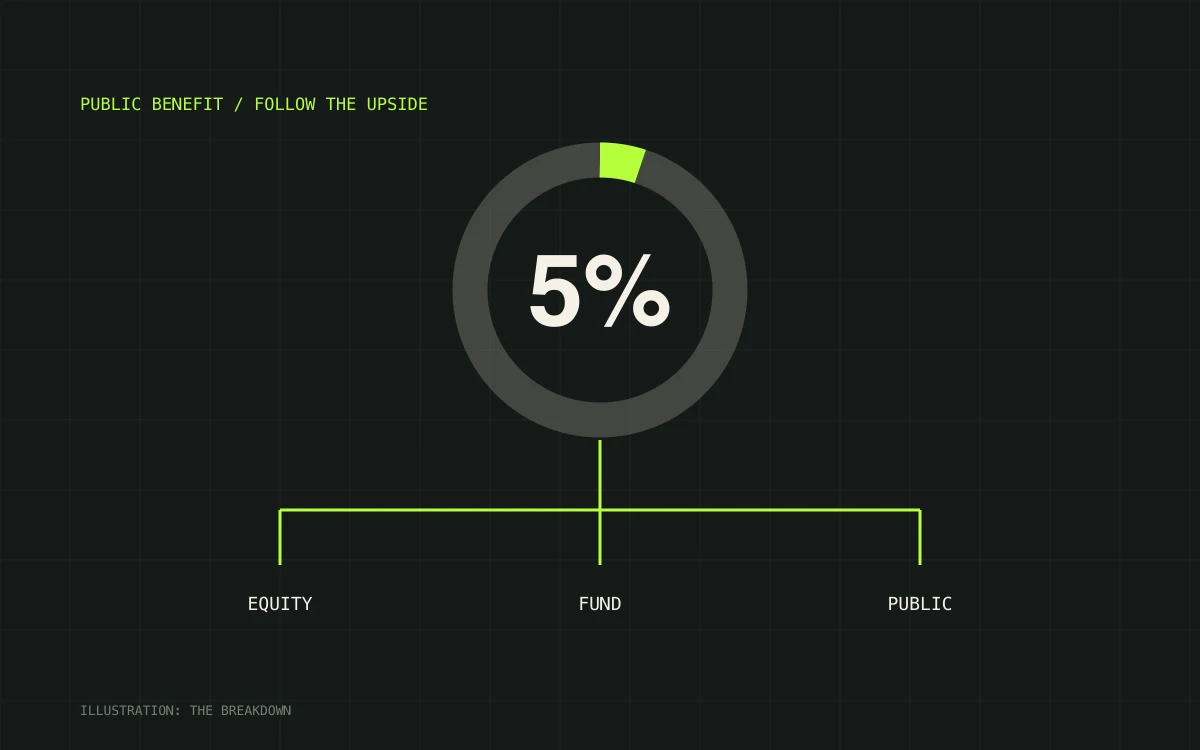
In its October 18 announcement, Anthropic said it would allocate 5% of its shares, subject to stockholder approval. The wholly owned fund could support nonprofits or make distributions to particular populations. The announcement identifies potential disruption to workers as one reason for the initiative.
That makes the proposal a story about the route from company growth to public support. A shareholding can connect a fund’s resources to a business’s success. What it does for a household or community depends on the next decisions: how resources become usable, who receives them and when.
THE PROOF
Anthropic says the fund is structured as an LLC. Its board could add another 2% of company shares for each 50% increase in value above a baseline. The company says equity held by the fund will not finance lobbying or political giving, and that further governance details will follow.
A useful comparison is a published grant program. The OpenAI Foundation’s October 1 announcement identifies 163 nonprofit recipients sharing $50 million through its 2026 People-First AI Fund. It describes support for community services, arts and culture, and local journalism. These are separate organizations and different mechanisms; a selected recipient list is a different stage of delivery from a proposed equity allocation.
The comparison gives readers a practical way to follow the story: distinguish a commitment, an allocation decision and support actually reaching its intended use. Each answers a different question.
THE CATCH
Company shares are not a household budget. Their headline value does not tell a reader how much can be distributed in a year, how regularly payments could recur or what an individual might receive.
The proposal should not be read as an open benefits application or a universal income program. Its announcement does not establish a general entitlement. Eligibility rules, spending decisions and governance will determine the actual shape of support.
There is an important design choice beneath the headline, too. Helping a nonprofit offer services and providing direct income can both serve a public purpose, but they address different problems. Evaluating the fund will require looking at what it chooses to do, rather than assuming every form of public benefit is interchangeable.
YOUR MOVE
Watch for named programs, eligibility criteria, recipient lists and payment dates. Those details will make the commitment understandable in everyday terms.
If you lead a nonprofit or work on workforce policy, keep this on your radar as a developing funding mechanism. Wait for official program information before treating it as a source of money available to your organization. The useful milestone is a clear route from the pledge to a service, grant or payment somebody can actually use.
An equity pledge describes who could share in future value. Programs, recipients and delivery will show what that promise means in real life.
Sources & further reading
- Anthropic: Investing in the public benefit ↗
- OpenAI Foundation: 2026 People-First AI Fund grantees ↗
- Story discovery: The Rundown, October 22 ↗
Original analysis by The Breakdown. Story discovered through The Rundown’s October 22 coverage. Read our editorial approach.