Blackout Tomorrow? November 17 FEMA Alert Test Explained
Watch on YouTube ↗ · 63 seconds
Does a scheduled alert test establish a scheduled blackout?
THE SHIFT
FEMA and the Federal Communications Commission have scheduled a nationwide Emergency Alert System test for Tuesday, November 17, 2026, at approximately 2:20 p.m. Eastern Time. The announced activity is a test of how participating communications providers receive and relay a national message.
FEMA's national test FAQ says radio and television programming may pause for about one minute. Wireless Emergency Alerts to mobile phones are outside this test's scope. If an emergency or significant weather requires postponement, the published backup date is December 3.
Those details describe a broadcast exercise. They do not announce an electricity shutdown.
THE PROOF
The FCC's September 16 notice sets out the date and distribution arrangements. FEMA's October 14 bulletin explains the purpose: assess whether providers receive and pass on the message, then resume programming.
The useful distinction is between information delivery and power delivery. In the test, FEMA initiates a message and participating providers relay it. In the electricity system, generators supply power that travels through transmission and distribution equipment. A scheduled broadcast announcement does not establish a scheduled operation of that equipment.
Military resilience planning is another separate issue. The Pentagon's September 30 FORTRESS America memorandum identifies energy independence, secure infrastructure, supply resilience and reserves as program pillars. Its preparation for disruption is not an announcement that a particular disruption will occur on November 17. The signed memorandum is available as an archived copy.
Backup generation has a clear engineering purpose: reduce dependence on an outside supply. A base with its own generation can support operations when external supply fails. That changes its ability to withstand a failure; it does not predict the date of one.
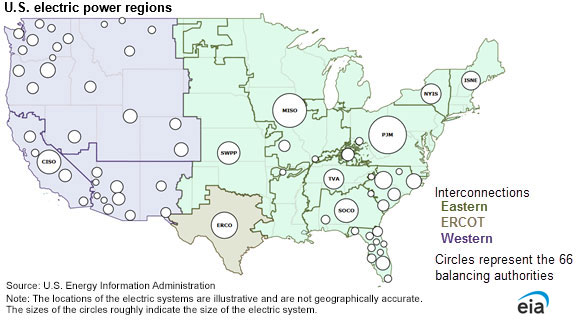
The civilian system also needs to be described accurately. The U.S. Energy Information Administration identifies three main interconnections in the lower 48: Eastern, Western and ERCOT, which covers most of Texas. These are large systems with limited links between them, rather than one giant circuit.
That architecture is context, not a guarantee against widespread outages. It provides no support for turning an alert-test calendar entry into a nationwide power-switch schedule.
YOUR MOVE
Expect the announced TV or radio test and check FEMA's current notice if its schedule changes. No public action is requested for the test. When evaluating a blackout claim, look for an actual announcement from the relevant agency, utility or grid operator, rather than a date attached to a different system.
A related engineering question is what can keep working when a connection disappears. Our report on Google's offline voice tools explains how moving a capability closer to the user changes its dependencies.
A test checks whether communication works. Backup power reduces dependence on an outside supply. Neither turns a date into evidence of a blackout.
Sources & further reading
- national test FAQ ↗
- FCC's September 16 notice ↗
- October 14 bulletin ↗
- signed memorandum is available as an archived copy ↗
- U.S. Energy Information Administration ↗
- Google's offline voice tools ↗
Published by The Breakdown. How we report · Our source desk.