US Air Force Hacked: What Hackers Reached Inside Cloud One
Watch on YouTube ↗ · 73 seconds
How bad is it that hackers got into the U.S. Air Force’s Cloud One?
THE SHIFT
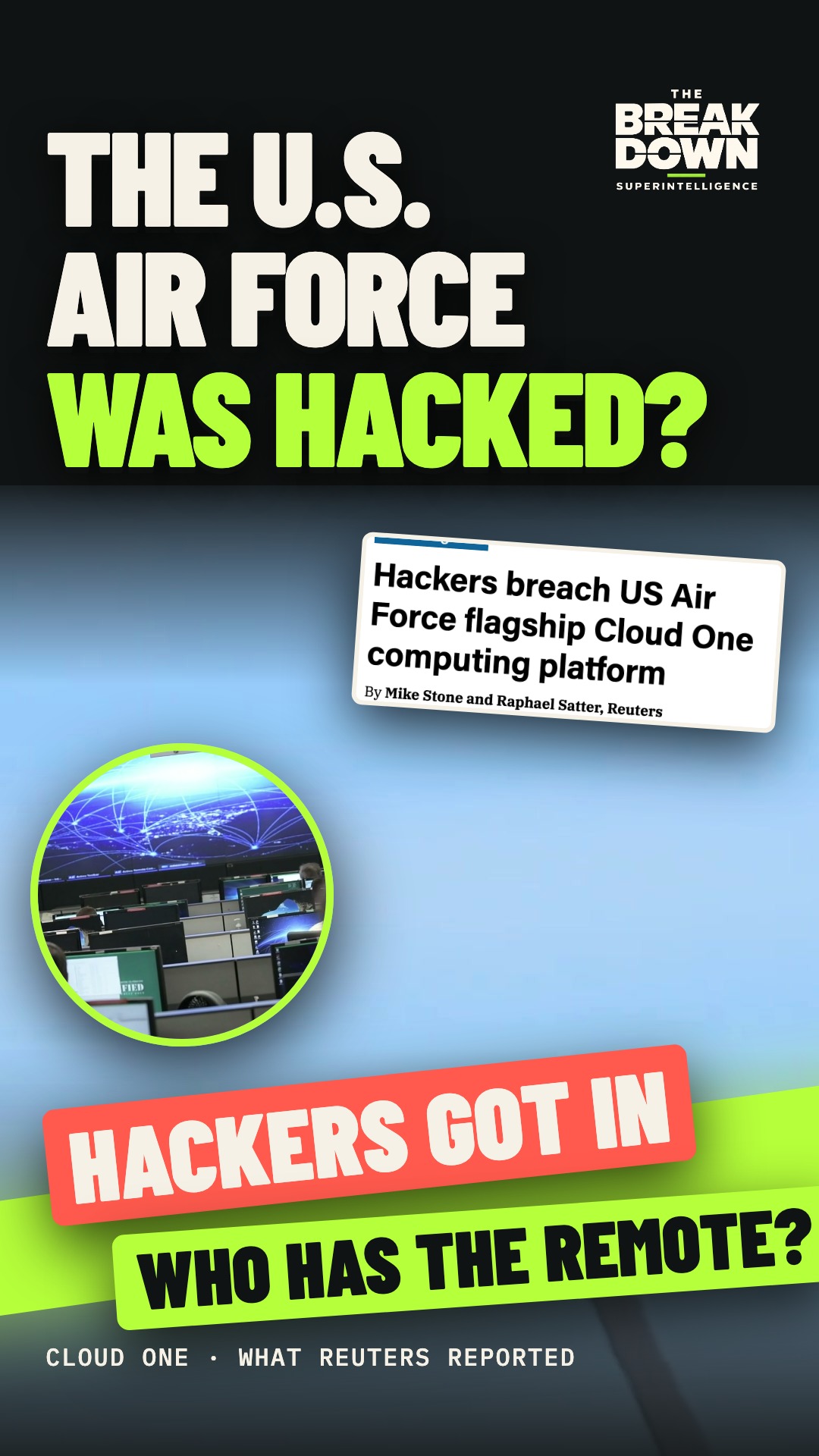
How bad is it when hackers get inside the U.S. Air Force? On November 27, 2026, Reuters reported that intruders had breached Cloud One, the service’s flagship cloud platform, citing several people familiar with the matter. The Air Force has not confirmed it. In a statement it said only that it does not discuss the security or operational status of specific systems.
What makes the report serious is not one stolen file. Cloud One is where the Air Force runs a large share of its software, so the question is how much of that software an intruder could touch from inside, and for how long nobody noticed.
THE PROOF
Cloud One started in 2017 as a single place for Air Force applications, built on commercial clouds from Microsoft, Amazon, Google’s parent Alphabet and Oracle. According to Reuters, it hosts software for pay, personnel records, logistics and maintenance, plus a system that gathers air defense radar feeds from across North America and another that tracks bombs and missiles at more than 200 Air Force locations.
Reuters’ sources say the break-in was found within roughly the past month, during an upgrade. One source says the intruders used a software flaw to reach the control plane, the management layer that sits above everything else, and compared it to a “universal remote.” Another says Cyber Command was brought in to assess the damage.
THE CATCH
Almost everything that matters is still unknown. Reuters could not establish who the hackers are, how far they got or whether any data was taken. In theory, the reported access could let someone check which aircraft are ready to fly or where spare parts are moving; Reuters says it is unclear whether that happened.
The damage so far is operational. Sources told Reuters that moving more back-office software onto Cloud One has been paused, updates to applications already on it were blocked, and some users lost administrator rights. Reuters also counts at least six other recently disclosed federal cyber incidents, from the FBI to the Treasury.
YOUR MOVE
If you work with defense systems or contractors, treat this as a reminder that control layers deserve the strictest protection: separate administrator access, watch management activity, and assume a single flaw can matter more than a thousand blocked attempts.
If you are following the story, watch for three answers: who was behind it, whether data left the platform, and whether the Air Force confirms anything on the record. Until then, the report rests on unnamed sources, and that is how it should be read. Those answers will decide whether this was a contained intrusion or a much larger problem.
In 2023 Cloud One’s leaders wrote that they had a 100% success rate against about 10 million attempts a year to break in. A defender has to win every one of those. A hacker has to win once. When everything sits in one cloud, once is enough.
Sources & further reading
- Reuters via Defense News: Hackers breach US Air Force flagship Cloud One computing platform (Nov 27, 2026) ↗
- Reuters via CNBC: Hackers breach U.S. Air Force flagship Cloud One computing platform (Nov 27, 2026) ↗
- New York Post: Hackers breach US Air Force flagship cloud computing platform (Nov 27, 2026) ↗
- Cloud One: official Air Force platform page (read Nov 27, 2026) ↗
- DefenseScoop: Cloud One: Taking aim at the enemy, one application at a time, by Cloud One Leadership (Feb 8, 2023) ↗
Published by The Breakdown. How we report · Our source desk.