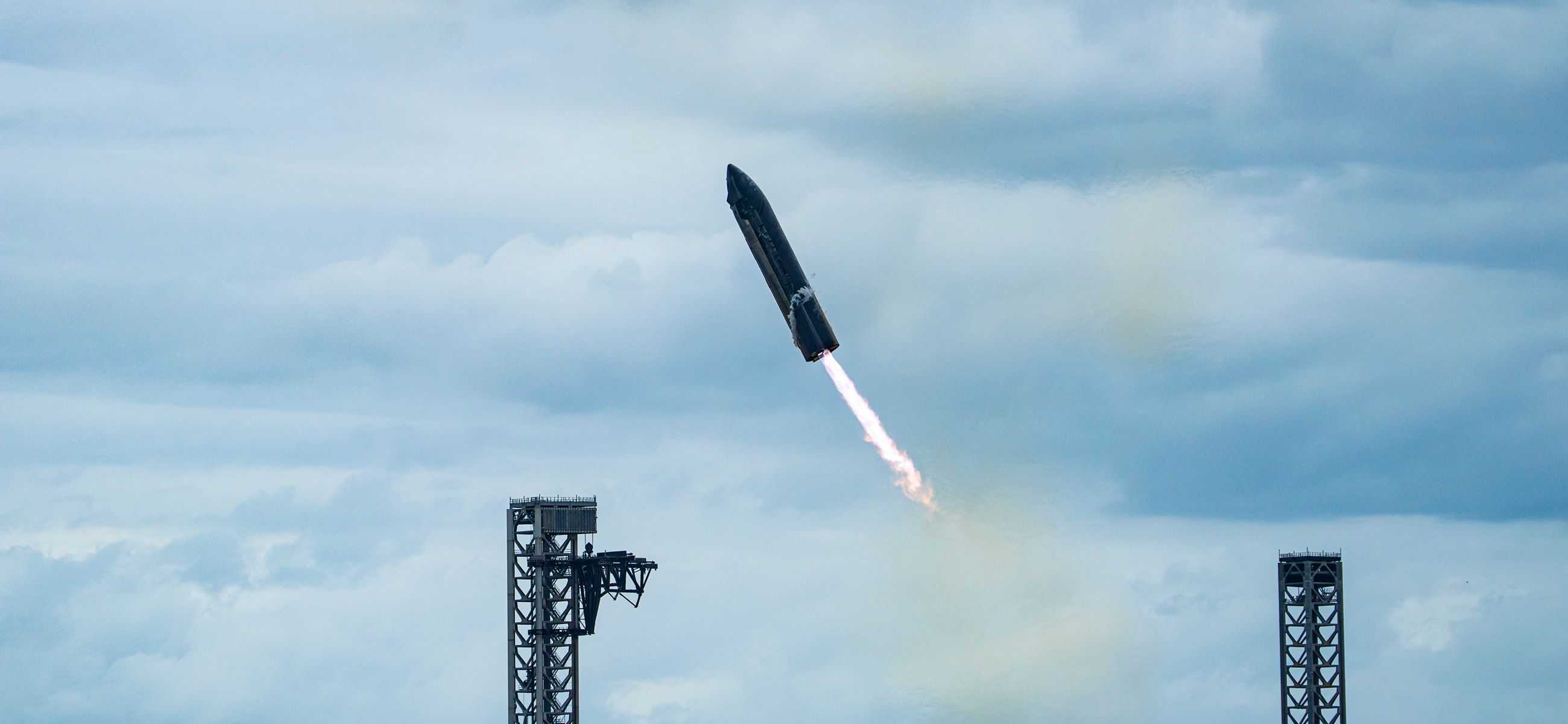
SpaceX Starship Catch Explained: Can It Fly Again?
Watch on YouTube ↗ · 95 seconds
Why is catching Starship different from catching its booster, and what still has to happen before reuse?
THE SHIFT
SpaceX brought the Starship spacecraft back from orbit and caught it with the arms of its launch tower at Starbase, Texas, on November 14. This was the first tower catch of the ship, the upper vehicle that travels into space. The familiar catch footage from October 2024 showed Super Heavy, the booster underneath it.
The distinction matters. Recovering the first stage leaves an expensive second vehicle to replace if the ship is lost. Flight 15 brought that second vehicle home after deploying satellites and spending more than 20 hours in space, according to SpaceX’s mission report.
The catch opens a practical question: what condition is the returned vehicle in, and what must happen before it can fly again?
THE PROOF
2023: getting the full machine into flight. The first flight of the integrated Starship and Super Heavy system on April 20, 2023 ended with both vehicles destroyed. SpaceX reported multiple engine failures, loss of altitude and tumbling before the flight termination system was commanded.
It was a starting point for an iterative flight campaign. At that stage, the challenge went beyond catching a rocket: the full system first had to demonstrate successful ascent, separation and controlled return.
2024: controlled returns, then a booster catch. On June 6, 2024, Flight 4 demonstrated controlled returns for both stages. Super Heavy performed a landing burn and soft splashdown in the Gulf of Mexico. The ship survived its atmospheric return and performed a flip and landing burn before splashing down in the Indian Ocean.
On October 13, Flight 5 took the booster recovery experiment to the launch tower. Super Heavy returned to Starbase and was caught by its mechanical arms on the first attempt. The upper-stage ship continued across the planet and splashed down in the Indian Ocean.
Those were two different outcomes in one mission. The booster catch established a way to recover the lower vehicle. It did not recover the ship that had traveled through space.
Tower recovery also changes where some landing hardware lives. Instead of relying on legs carried by the booster, fixed ground equipment receives it. That is an architectural trade: more capability at the launch site and a demanding requirement to bring the vehicle to the right place under the right conditions. It is not, by itself, a measurement of operating cost.
2026: the upper stage comes home. Flight 15 launched on November 13. Its booster completed ascent, but its return burn ended early because of low fuel mass. SpaceX says the cause remains under investigation. Guidance automatically aborted the catch attempt and diverted the booster to an offshore landing location. After its landing burn shut down over the Gulf, the flight termination system was triggered.
The ship continued its mission. SpaceX reports that it reached orbit, deployed 26 Starlink V3 satellites, and remained in space for more than 20 hours before preparations for its return.
On November 14, it performed a deorbit burn, returned through Earth’s atmosphere and approached Starbase. After breaking through clouds, three engines ignited for the landing flip and descent into the tower’s arms. SpaceX’s mission summary identifies this as the first catch of Starship itself.
THE CATCH
Flight 15 did not recover both vehicles. The booster diverted offshore, even as the ship achieved its first catch. Describing the mission as a successful “double catch” would erase that distinction.
Nor does a catch establish rapid turnaround. A returned spacecraft makes physical inspection possible. The amount of inspection, repair and replacement it requires is part of the next question about reuse. This mission’s recovery is evidence of recovery; the work and performance of a subsequent flight will provide evidence about reflight.
YOUR MOVE
When watching the next Starship milestones, separate three questions: which stage returned, whether that same vehicle flies again, and how much work separates its flights. Those questions reveal more about progress toward reuse than treating every landing as the same achievement.
Bringing a rocket back is only half the business model. You have to fly it again. This catch brings the upper stage home for inspection. The next proof is how much work it takes to turn that recovered spacecraft into another flight.
Sources & further reading
- SpaceX: Starship Flight 15 mission report ↗
- SpaceX: first integrated flight, April 2023 ↗
- SpaceX: Flight 4, June 2024 ↗
- SpaceX: Flight 5, October 2024 ↗
Published by The Breakdown. How we report · Our source desk.