Inkling 2 Small Explained: AI That Builds, Looks and Revises
Watch on YouTube ↗ · 60 seconds
What changes when an AI can inspect what its code produces?
THE SHIFT
Thinking Machines introduced Inkling 2 Small on November 5. The model accepts image inputs alongside text and is available through Tinker. Its announcement puts particular emphasis on coding work that continues over multiple steps, including websites, games and interactive 3D scenes.
That changes the relationship between a coding model and its output. A program can run without producing the intended visual result. A layout might overlap, a scene might be missing a detail, or an interaction might be confusing. Visual feedback gives the agent another signal beyond the source code and a successful execution.
The useful way to understand it is a loop: create an output, inspect the rendered result, make a revision. That explanation describes the mechanism; it does not guarantee that every revision improves the work.
Source: Introducing Inkling 2 Small — Thinking Machines, November 5, 2026 ↗
THE PROOF
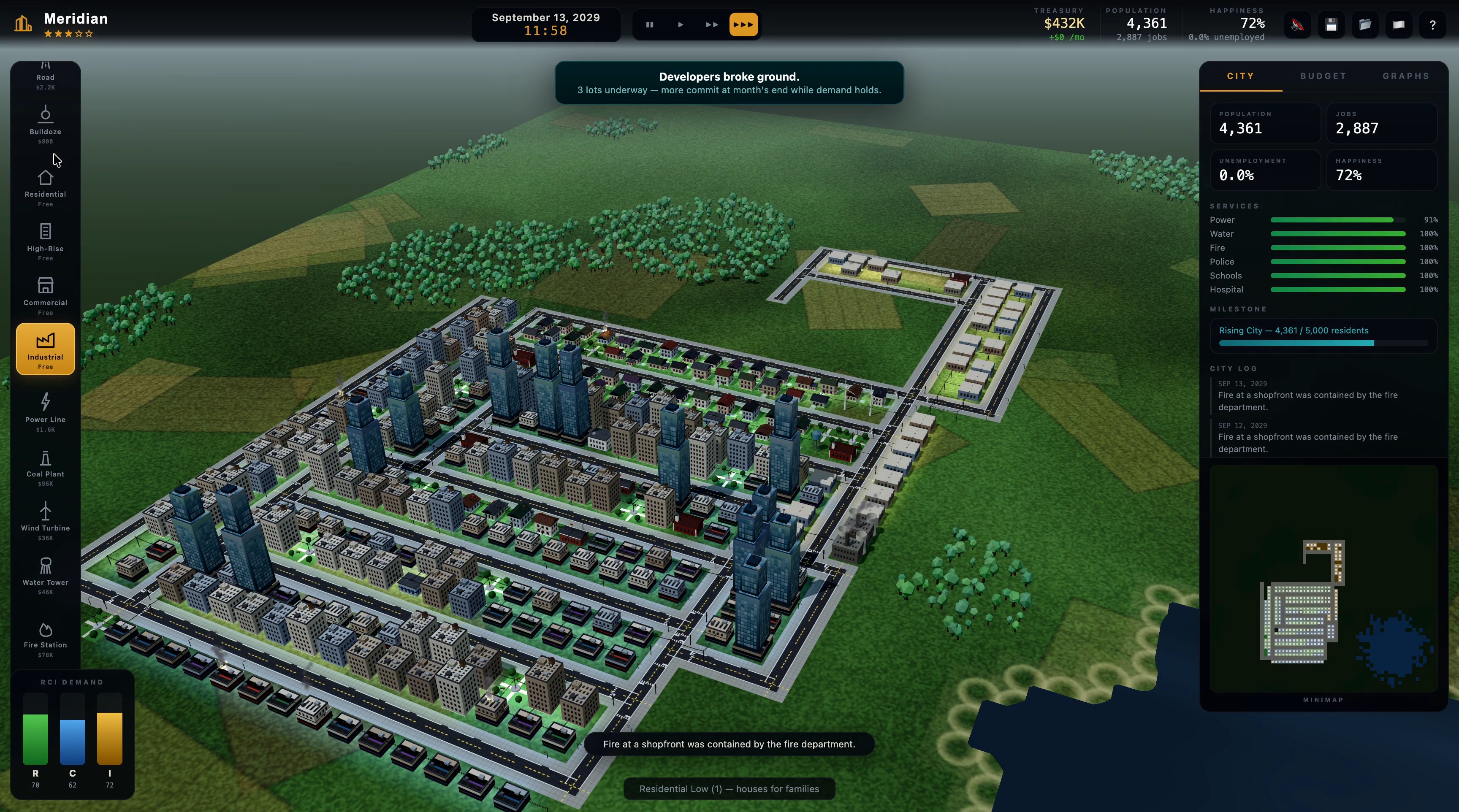
The company's official city-simulator demonstration shows a playable environment built with Three.js. Thinking Machines says the buildings, textures and cars are generated procedurally rather than supplied as pre-made assets. The player can develop a city from a road and manage systems such as power and budgets.
A second demonstration uses Blender to create a paper valley with origami cranes. The company describes subsequent changes to the water and chimney. Together, these examples connect coding to something more concrete than a block of text: an interactive result and a scene that can be visually inspected.
The footage establishes what the company chose to demonstrate. It also gives us a clear illustration of why image input matters to an agent doing visual work. The image is not merely something to describe; it can become feedback for the next step.
Source: Introducing Inkling 2 Small — Thinking Machines, November 5, 2026 ↗
THE CATCH
A selected successful demo does not provide a failure rate for a different project. The practical questions are how much instruction the agent needs, whether it notices the right problem and whether a change introduces another one.
Access also needs careful wording. The November 5 announcement makes Inkling 2 Small available through Tinker with closed weights at launch. Thinking Machines says it intends to release the full weights under Apache 2.0 after external safety testing and red-teaming. That plan is not a completed weights release.
YOUR MOVE
For a visual coding task, separate the desired behavior from its appearance. A page should work and remain readable. A game should run and make its controls understandable. Look for the step where the agent compares its output with the goal, rather than judging the whole system from its most impressive screenshot.
Tinker is the access route linked in the announcement. Check the current model documentation and release status before choosing a deployment or assuming downloadable weights are available.
Writing the code creates the first version. Seeing what that code made creates the opportunity to improve it. The feedback loop is the development worth watching.
Sources & further reading
- Introducing Inkling 2 Small — Thinking Machines, November 5, 2026 ↗
- From code to physical design: AI-assisted CAD and simulation ↗
- Managed agents: what continues after the first instruction ↗
Published by The Breakdown. How we report · Our source desk.